Blog

Highway & Road Solar Street Light Installation: Specs, Poles, and Best Practices for SA Contractors

When bidding for road infrastructure tenders in South Africa, EPC contractors and builders face two major local realities: severe load shedding leaving highways in the dark, and rampant cable theft that renders traditional grid-tied lighting useless.

(Professional DIALux 3D layout simulation ensures tender compliance for highway projects)

Finding a reliable solar street light for road project is the ultimate solution. However, winning a municipal or SANRAL (South African National Roads Agency) tender isn't just about offering the brightest light—it’s about tender technical compliance and seamless site execution.

In this comprehensive guide, we break down the international lighting standards (EN 13201), debunk electrical myths like whether solar street lights need earthing, and explain why partnering with a one-stop solution provider saves you major installation headaches.

1. Designing to EN 13201-2:2015 Standards: Road Classification & Pole Specs

When bidding for high-end South African municipal or SANRAL projects, rule-of-thumb estimates are not enough. The tender committee requires the lighting design to strictly comply with international standards such as EN 13201-2:2015 (Road lighting - Performance requirements).

EN 13201 is a performance-based standard. It does not dictate what pole height or wattage you must buy; instead, it specifies the exact photometric results (Luminance, Illuminance, Uniformity, and Glare) that must be achieved on the road surface based on traffic speed and volume.

Here is a breakdown of the three main road classes you will encounter in tenders, and the industry best-practice pole specs our engineers recommend to guarantee compliance with these standards:

A. Highway / Main Arterial Roads (EN 13201: M-Class)

For high-speed motorized traffic, the standard focuses on high road surface luminance (Lav) and strict disability glare control (Threshold Increment - TI).

EN 13201-2 performance requirements table for M-Class highway solar street light for road projects

(Above: EN 13201-2 target metrics for M-Class roads)

To achieve these high-speed metrics, we recommend:

  • Pole Height: 8m – 12m
  • LED Power: 80W – 150W (High-lumen output)
  • Pole Spacing: 30m – 40m
  • Beam Angle Optic: Type II / Type III (Designed for wider forward throw)

B. Municipal Urban Roads (EN 13201: C-Class & P-Class)

For low-speed urban roads, conflict areas, and walkways, the standard shifts focus to horizontal illuminance (Eav) and semi-cylindrical illuminance to ensure pedestrians can recognize faces from a safe distance.

EN 13201-2 photometric requirements table for P-Class pedestrian and urban solar led street light installations

(Above: EN 13201-2 target metrics for P-Class pedestrian & low-speed areas)

To achieve these urban metrics, we recommend:

  • Pole Height: 6m – 8m
  • LED Power: 60W – 100W
  • Pole Spacing: 25m – 30m
  • Beam Angle Optic: Type II / Type III

C. Rural Roads / Village Roads (Lower P-Class)

For remote township projects or off-grid village roads where safety and basic visibility are the primary concerns (falling under lower P5-P6 classes), a cost-effective yet reliable configuration is required.

  • Pole Height: 5m – 6m
  • LED Power: 40W – 60W
  • Pole Spacing: 20m – 25m
  • Beam Angle Optic: Type II / Type V (Depending on road width)

💡 The Engineering Rule of Spacing (Backed by CIE 115 & IESNA RP-8)

To consistently hit the overall uniformity (Uo) targets shown in the tables above without creating dark spots, optical designs must align with global roadway lighting guidelines, including CIE 115 (International Commission on Illumination) and IESNA RP-8.

Based on the photometric geometry required by these standards, the industry's best-practice rule for modern batwing lenses is to set your Pole Spacing ≈ 3 to 4 times the Pole Height. For example, an 8-meter pole typically requires 24m to 32m spacing depending on the optic lens used.

2. Proving Compliance: Why DIALux Simulation Wins Tenders

DIALux roadway lighting simulation report proving EN 13201 compliance for solar street light with pole system

Municipal consultants do not want verbal promises; they want mathematical proof. This is why we provide comprehensive DIALux simulation reports for our EPC partners. As shown in the simulation above, our optical design proves to the tender committee that your bid achieves the exact Average Luminance (Lav) and Overall Uniformity (Uo) required by EN 13201, ensuring you pass the technical evaluation with ease.

3. Avoiding the Mix-and-Match Trap: The One-Stop Solution

Once the design is approved, site execution begins. One of the biggest headaches for SA contractors is sourcing the light fixture from Supplier A, the bracket from Supplier B, and hiring a local steelworks to make the pole. This often leads to mismatched spigot sizes, weak structural integrity, and delayed handovers.

We solve this by offering a complete solar street light with pole system, engineered specifically for municipal-grade durability:

  • Municipal-Grade Waterproofing: Summer thunderstorms and coastal humidity are brutal. Our solar led street light fixtures feature true IP65/IP66+ waterproof ratings, ensuring the battery and controller remain absolutely dry.
  • Aerodynamic & Wind-Resistant Poles: For coastal areas like Cape Town or Gqeberha, our hot-dip galvanized poles and precision brackets are engineered to withstand 35–45m/s gale-force winds, providing the optimal tilt angle for maximum solar charging.
  • Pre-Drilled & Matched: All components are factory-matched to fit perfectly on-site, drastically reducing your labor hours.

4. Best Practices: How to Install Solar Street Light

Proper installation ensures the longevity of the system. Here is a streamlined guide on how to install solar street light systems efficiently for highway projects:

  1. Step 1: Foundation Pouring. Excavate the hole (typically 1/6th of the pole length). Place the anchor bolt cage (J-bolts) and PVC conduit (for the earthing wire) before pouring the concrete. Ensure it cures completely.
  2. Step 2: Ground Assembly. Never attempt to assemble the fixtures at the top of a standing pole! Lay the pole horizontally on the ground to attach the bracket, solar panel, and light fixture.
  3. Step 3: Plug-and-Play Wiring. Connect the aviation cables between the solar panel and the light. Our systems feature waterproof connectors—push them together until you hear a "click," and the seal is secured.
  4. Step 4: Hoisting. Use a crane to lift the fully assembled structure. Align the base plate with the anchor bolts, tighten the nuts, and level the pole.

5. Frequently Asked Questions (FAQs)

Q1: Does solar street light need earthing?

Typical pole earthing detail CAD drawing for solar street light lightning protection

(Above: Standard CAD drawing for metal pole earthing)

Yes, the metal pole must be earthed. While solar lighting operates on a low-voltage DC system (eliminating the risk of fatal electric shock), earthing is strictly required for lightning protection.

South Africa experiences high lightning strike density. If a metal light pole is not properly earthed, a nearby lightning strike will send a massive surge directly into the equipment, instantly frying the MPPT controller and lithium battery. Proper earthing protects your asset and prevents high maintenance costs.

Q2: How to set solar street light with remote for batch programming?

When installing 100+ lights, manually climbing each pole is inefficient. Using our remote control, you can:

  • Program your desired dimming profile (e.g., 100% brightness for the first 4 hours, 50% till dawn) into the remote.
  • Press the "Send" or "Copy" button.
  • Walk or drive slowly along the installation site, point the remote at the sensor of each light, and press the trigger.

You can program an entire kilometer of highway lighting in minutes, ensuring uniform performance while massively saving on labor costs.

Win Your Next SA Road Tender with Compliant Solar Lighting

Stop risking project handovers with mismatched parts and non-compliant specs. Partner with us for complete EN 13201 compliant solar street light with pole solutions, DIALux simulation reports, and municipal-grade engineering support.

Contact Us for a Custom System Design

DALI Tennis Court Lighting: A Smart Solution for a German Club​
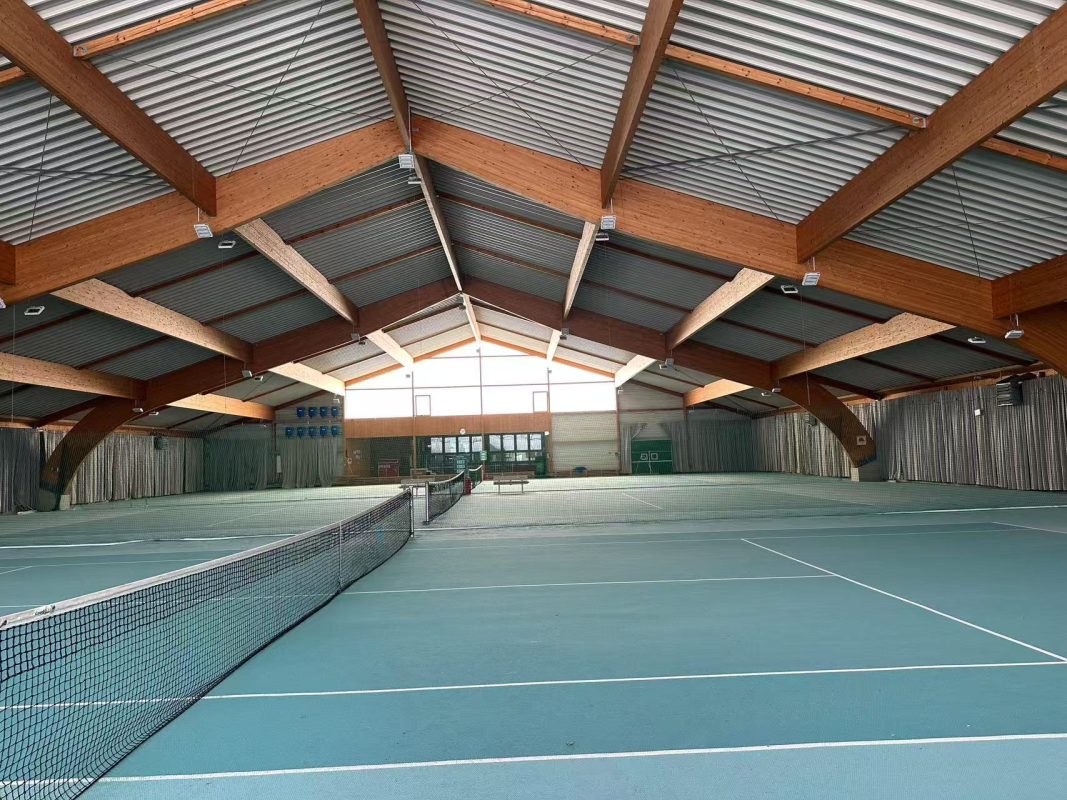
Discover a smart Led DALI Tennis Court lighting project in Germany. The tennis club chose Leyond’s dimmable floodlights for their new DALI control system, achieving top efficiency & flexibility.

​Introduction: The Future of Sports Lighting is Intelligent​
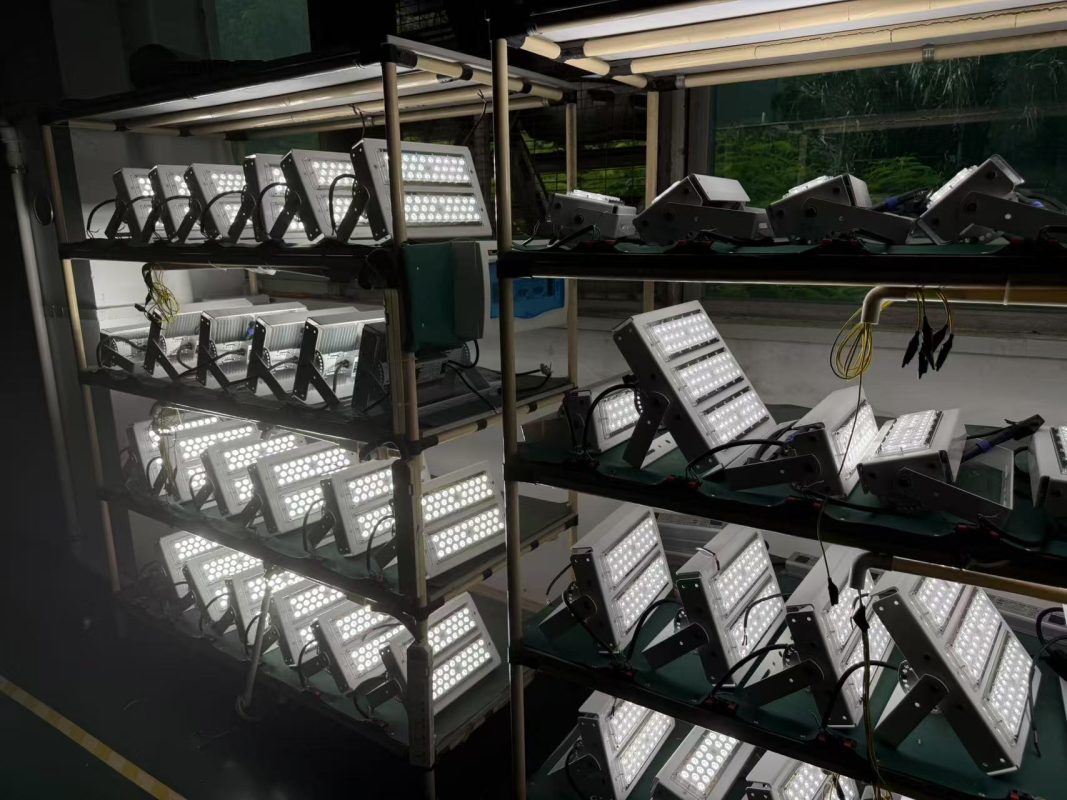
A forward-thinking tennis club in Germany embarked on a comprehensive facility upgrade. Their goal was not only to replace inefficient old lights but to implement a smart, future-proof lighting system. The club had already designed a ​​DALI-based dimming control system​​ for ultimate flexibility and energy savings. Their challenge was finding robust, high-performance LED floodlights that were seamlessly compatible with this advanced protocol. They found their solution with Leyond Lighting.

​Project Overview​

  • •​​Client:​​ A tennis club in Germany implementing a smart lighting strategy.
  • •​​Goal:​​ Integrate high-efficiency LED floodlights with a new DALI dimming control system for intelligent court management.
  • •​​Key Requirement:​​ Floodlights must be ​​dimmable and fully compatible​​ with the club’s chosen DALI infrastructure, in addition to providing superior tennis lighting.
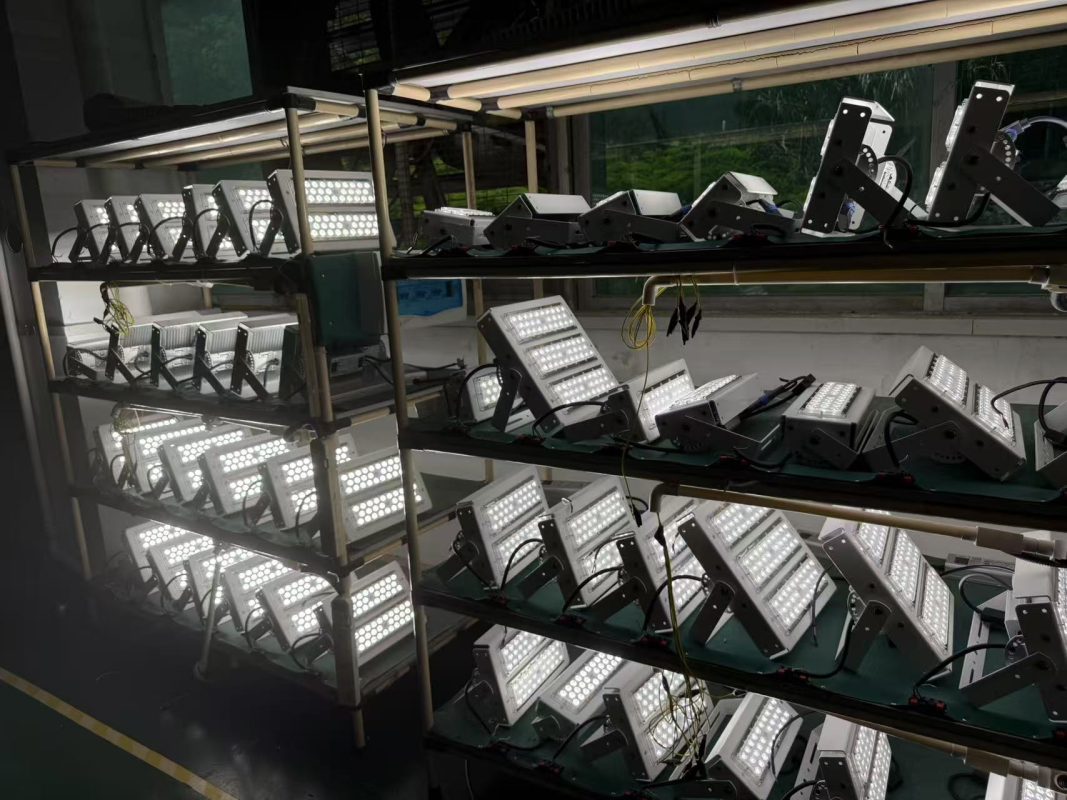
  • •​​Products Used:​​ ​​Leyond LY-ST23050XX/ LY-ST230150XX DALI-Dimmable LED Floodlight​​ series.
    https://leyond.com.cn/newsinfo/3084607.html?templateId=195506
The Leyond Solution: Seamless Integration and Intelligent Control​

This project was about partnership and technical synergy. We provided the perfect hardware to match the client’s smart software vision.

  1. 1.​​Native DALI Compatibility:​​ Our dimmable LY-ST23050XX-LY-ST2301000XX floodlights are engineered for straightforward integration with DALI systems. This allowed the club to easily group lights, create pre-set lighting scenes (e.g., “Training,” “Match,” “Maintenance”), and schedule operation directly from their control panel.
  2. 2.​​Precision Performance Meets Smart Control:​​ The lights deliver the crisp, uniform illumination required for tennis. Coupled with DALI dimming, the club can now precisely adjust light levels to suit any activity, eliminating energy waste during setup or casual practice.
  3. 3.​​Maximized ROI through Intelligence:​​ The combination of high-efficiency LEDs and intelligent dimming leads to unprecedented energy savings. The system’s flexibility also extends the lamps’ lifespan and reduces operational costs even further.

​Results: Unlocking a New Level of Efficiency and Flexibility​

The integration was a success, delivering tangible benefits:

  • •​​Intelligent Control:​​ The club now enjoys centralized control over court lighting, with the ability to dim lights to exact levels for any need.
  • •​​Optimized Energy Savings:​​ Energy consumption was drastically reduced, with additional savings achieved through scheduled dimming and off-hours.
  • •​​Enhanced Facility Usability:​​ Different lighting scenes create the perfect atmosphere for tournaments, training sessions, or social events, increasing the court’s value.

​Quote from the Project Manager:​​ “The Leyond team understood our need for a truly intelligent solution. Their dimmable floodlights integrated with our DALI system without any issues. We now have a state-of-the-art lighting setup that is incredibly efficient and easy to manage. It was the perfect hardware-software match.”

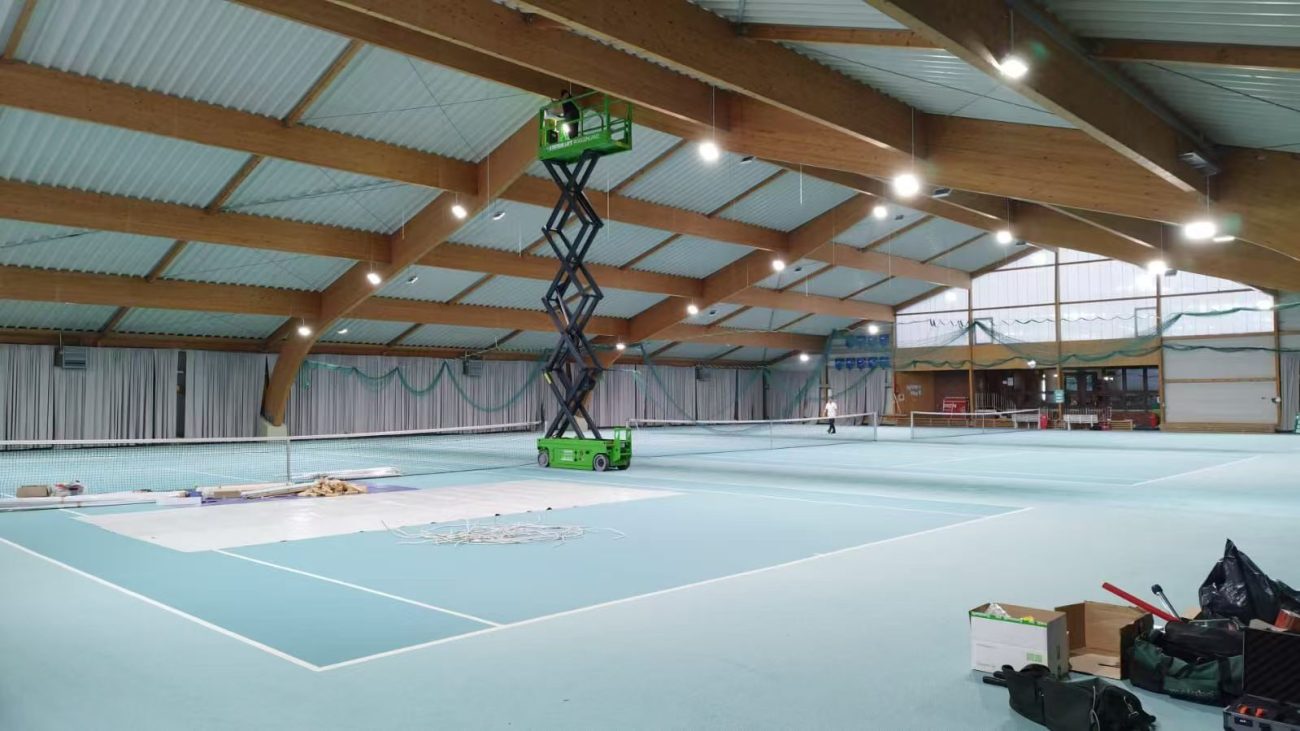
Case Pictures:
​Your Partner for Intelligent Lighting Solutions​

Modern sports lighting is about more than just lumens. It’s about control, data, and efficiency. At Leyond Lighting, we provide ​​future-ready products​​ that work with leading control protocols like DALI, ensuring your investment is smart, scalable, and sustainable.​
We specialize in providing high-quality, compatible lighting for custom smart projects worldwide.​

Leyond Lighting has been a leader in the street lighting manufacturing industry for nearly twenty years, offering end-to-end services from technical consulting and design to manufacturing and delivery. Our extensive product range is designed to meet the precise needs and budgets of various global projects, and we are committed to building a brand known for excellence in quality and reliability. Choosing Leyond Lighting means choosing not just a supplier, but a strategic partner, dedicated to helping you succeed with innovative solar LED solutions.
To learn more about, we invite you to visit our website.​


​Ready to Build Your Smart Lighting System?​

Whether you’re planning a DALI, 0-10V, or other smart system, our products can fit your design. Contact us with your control requirements.​​Contact Us for Technical Specifications​​| ​​Explore Our Dimmable Products​

Leave a Reply

Your email address will not be published. Required fields are marked *

Facebook X Pinterest linkedin Telegram
Start typing to see products you are looking for.