
Blog
The Ultimate Guide to Solar Street Lights for Rural Villages in South Africa
In many rural villages across South Africa, access to stable electricity remains a severe infrastructure challenge. Even in areas connected to the grid, the relentless reality of load shedding and cable theft often leaves local roads, pathways, and communities in complete darkness.
For contractors, municipalities, and project developers, extending the traditional power grid to these remote locations is not only prohibitively expensive but also a logistical nightmare. Trenching, cabling, and ongoing electricity tariffs make traditional lighting projects financially unviable.
This is exactly why off-grid solar street lights in South Africa have transitioned from an "alternative" to the mandatory standard for rural development.
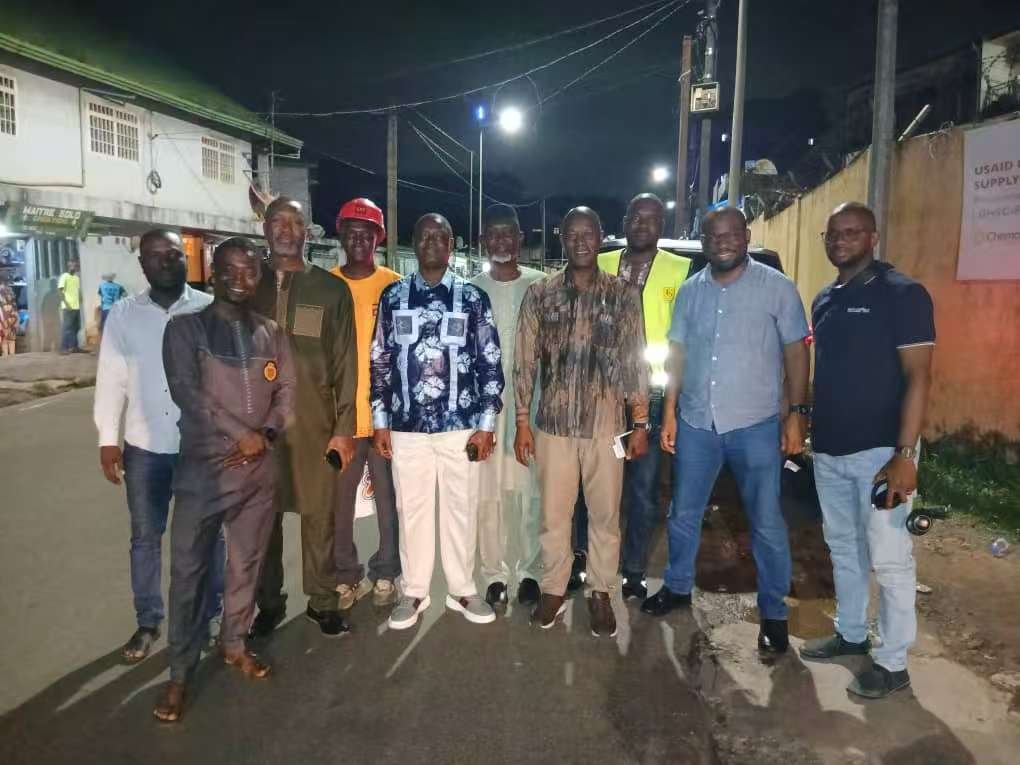
▲ Successful delivery: Local officials and contractors celebrating a reliable lighting project in West Africa. We bring the same high-brightness standards to our South African off-grid solar projects.
Why Rural Areas in South Africa Need Solar Street Lights
Solar lighting is no longer just about "going green"—it’s about survival and project feasibility. Compared to traditional grid-powered lighting, a solar system offers massive advantages for contractors:
- Zero Trenching & Cabling: Eliminates the highest costs of civil engineering.
- Immune to Load Shedding: Operates 100% independently from the Eskom grid.
- No Cable Theft Risk: With no underground copper cables, thieves lose their primary target.
- Fast Deployment: A whole village can be lit up in days, not months.
For rural projects, the ultimate goal is reliable, self-sustaining illumination with zero maintenance headaches.
The Best Choice: "All-in-One" Solar Street Light for Villages
When consulting with South African municipalities, the most recommended solution for rural applications is the All-in-One solar street light (also known as integrated solar lights).
What makes it different? It completely integrates the highly efficient solar panel, battery, smart controller, and LED module into a single, compact unit.
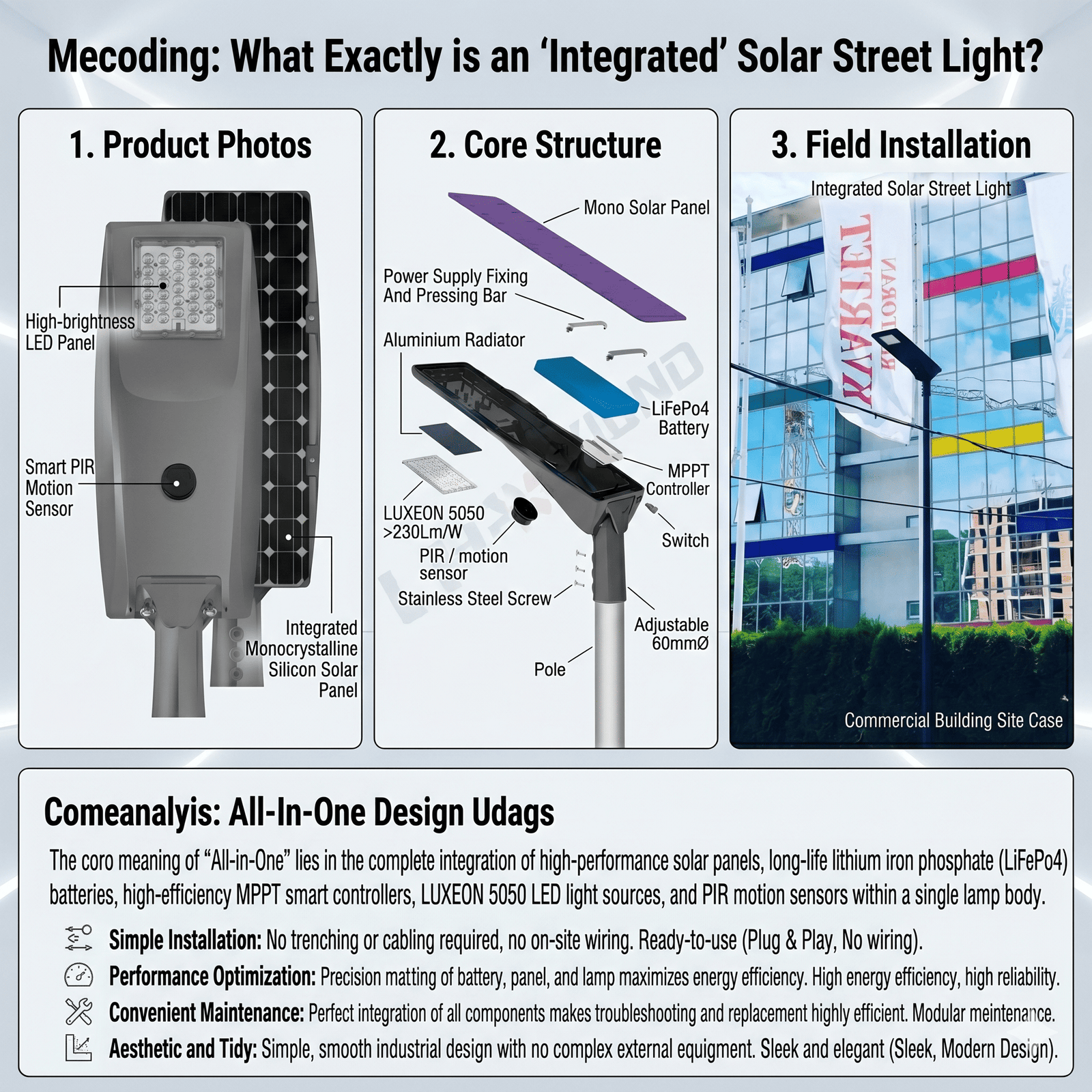
▲ Integrated design protects core components and prevents vandalism.
Why Builders and Contractors Prefer It:
- Ultimate Anti-Theft Design: Traditional split-system solar lights often have batteries buried underground or hung low on the pole—making them easy targets for vandalism. The All-in-One design secures the battery at the very top of the pole (6-8 meters high), making it nearly impossible to steal without a crane.
- Plug-and-Play: Absolutely no complex wiring is required, drastically reducing human error during installation.
- Fewer Failure Points: Integrated components mean fewer exposed wires and better waterproofing against harsh African storms.
How Long Do Solar Street Light Batteries Last?
This is the #1 question we receive from project buyers. For remote villages, sending a maintenance crew to replace a battery costs more than the lamp itself.
The Market Trap: Many low-budget systems use cheap Lead-Acid or low-grade lithium batteries that degrade within 1–2 years and fail completely after a few cloudy days.
Our Engineering Standard: For South African projects, we strictly use high-capacity LiFePO4 (Lithium Iron Phosphate) batteries.
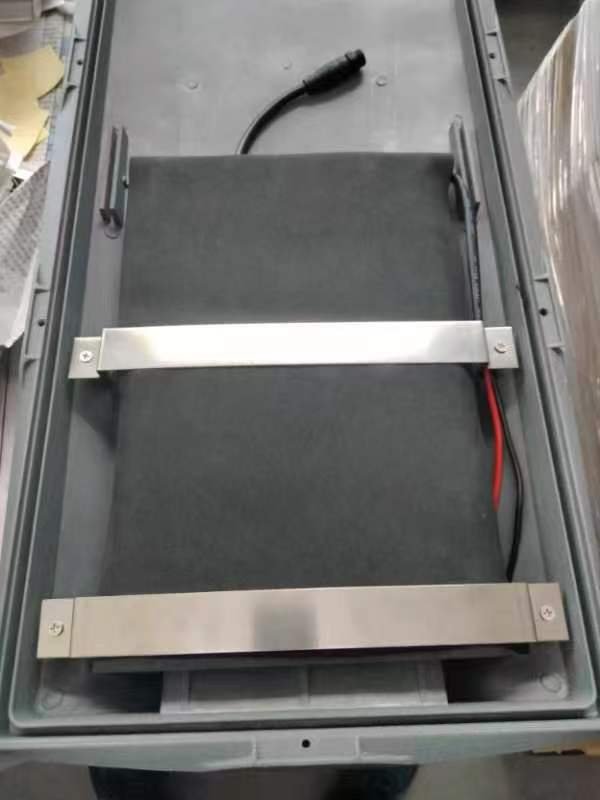
▲ High-capacity LiFePO4 batteries ensure up to 8 years of reliable performance.
- Lifespan: 5–8 years (over 2000–3000 charge cycles).
- Thermal Stability: Extremely safe and resistant to high African summer temperatures.
- Autonomy: A well-designed system will provide 3–5 nights of continuous lighting even during severe rainy or cloudy weather.
Easy Installation: No Crane Needed for Remote Areas
One of the most overlooked challenges in rural projects is logistics. Narrow, unpaved village roads often mean heavy machinery like cranes simply cannot access the site. If a lighting system requires a crane, the installation budget skyrockets.
We solve this by offering solar street lights with pole solutions explicitly designed for manual installation. Because the All-in-One light head is lightweight and requires no underground foundation wiring:
- Prepare a basic concrete foundation.
- Mount the light head to the pole on the ground.
- Only 2-3 workers can manually lift and secure the pole into place.
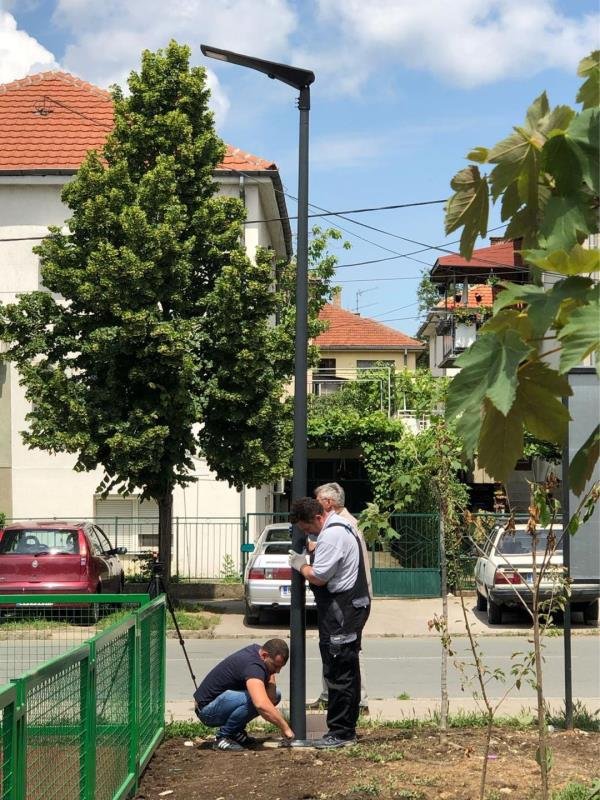
▲ Manual installation by 2 workers—no crane required, saving massive project costs.
This manual-friendly design reduces project timelines by weeks and slashes heavy machinery rental costs to zero.
Real Project Experience You Can Trust
In multiple off-grid infrastructure projects across Africa, our solar lighting systems have proven their durability. Whether facing intense UV radiation, heavy rainfall, or high-risk theft environments, our structural design ensures stable operation with near-zero maintenance. We have successfully supplied thousands of units for rural pathways, securing community safety and lowering contractor overheads.
FAQ: Solar Street Lights South Africa
1. Can solar street lights work during load shedding?
Absolutely. Because they generate and store their own power completely off-grid, they are 100% immune to Eskom load shedding schedules.
2. Are solar street lights worth the investment for rural areas?
Yes. While the initial capital expenditure (CAPEX) might be slightly higher than an empty AC grid light, the elimination of trenching, cabling, and monthly electricity bills means the ROI is usually achieved within the first 2 years.
3. How to install a solar street light with a pole?
With an All-in-One system, installation is straightforward. Secure the anchor bolts in the foundation, attach the light fixture to the top of the pole while on the ground, and manually raise the pole with 2-3 workers. No certified electrician or crane is required.
Struggling with Theft & High Installation Costs in Your Rural Project?
Get a FREE DIALux lighting simulation and a precise B2B quote for our anti-theft, All-in-One solar street lights. Protect your budget and eliminate load shedding headaches.
Contact Us for a Custom System Design
Skay Xia - International Sales Manager
Hello Customers, I have been deeply involved in the LED lighting industry for over 18 years. I excel at providing customized lighting solutions and professional technical support. Feel free to contact me for your project needs.
Email: sales05@leyond.com.cn