
Blog
Solar Street Light for DPWH Projects in the Philippines: Engineering Compliance
Executing a solar street light project in the Philippines is never just about "installing lights."
It is a comprehensive system engineering challenge that must withstand typhoons, torrential rains, salt spray, extreme heat, and rigorous government technical audits. With an average of over 20 typhoons annually, a rainy season lasting 6–7 months, and coastal cities constantly exposed to severe salt spray corrosion, standard commercial-grade solar street lights often fail after just one typhoon season. Common issues include cracked housings, swollen batteries, waterlogged controllers, and severe light degradation.
The reality is: Most projects fail not because the typhoons are too strong, but because the engineering design is inadequate.
Meeting the road lighting performance requirements of the Department of Public Works and Highways (DPWH) requires far more than assembling standard parts. It demands source-manufacturer-level structural design capabilities, advanced thermal management, and truly reliable energy storage systems. As a manufacturer with 18 years of industry expertise, equipped with die-casting, extrusion, and private mold development capabilities, Leyond Lighting focuses on system engineering, not just spec-sheet parameters.
I. The Real Challenges Behind DPWH Road Lighting Requirements
The core concerns of DPWH for road lighting include:
- Illuminance and Uniformity Compliance
- Wind Load Structural Safety
- Electrical System Stability
- Long-term Weather Resistance
Solar lighting systems must meet these requirements under completely off-grid conditions. In the Philippine environment, the true hidden danger is often the "Cavity Greenhouse Effect".
38°C Ambient Temperature → 50°C Metal Housing → 60°C Sealed Internal Cavity → 70°C Battery Core Temperature
This intense internal heat is the fundamental cause of accelerated battery degradation.
II. Structural Material Comparison: Which Can Truly Survive the Typhoon Season?
1️⃣ Commercial Public Mold Structures
Common Issues: 1.2mm thin-wall housings, recycled scrap aluminum, poor coating adhesion, and insufficient vibration and wind resistance. These products are unfit for municipal-grade infrastructure projects.
2️⃣ Extruded Aluminum Structures — High Thermal Conductivity
For instance, our Sunplus Series utilizes a high thermal conductivity extrusion structure, ideal for high-power modules.
- Advantages: High thermal efficiency, suitable for high-wattage applications.
- Critical Considerations: Multi-section splicing structures rely heavily on assembly craftsmanship. Under intense rainstorms, inferior spliced structures pose a severe risk of water ingress.
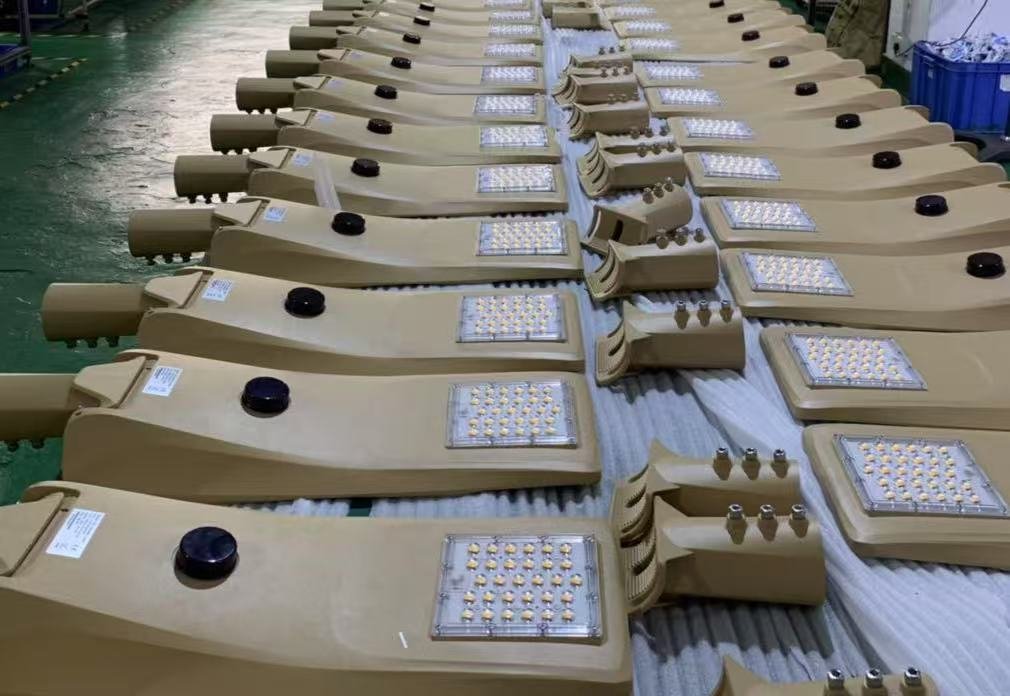
3️⃣ Thickened ADC12 Die-Cast Aluminum — The Engineering-Grade Solution
Our Sunpro Series, featuring a thickened ADC12 unibody die-cast private mold structure, is specifically engineered for high salt spray and severe wind load environments.
- Core Advantages: Unibody structure, Level-17 typhoon wind load resistance, zero splicing gaps, and higher thermal mass buffering.
Thickened die-cast aluminum serves as a massive "thermal buffer pool." It delays internal temperature rise, reducing the risk of long-term high-temperature battery aging. In coastal high-salt environments, the unibody structure significantly minimizes corrosion pathways.
III. The Fundamental Difference Between MPPT and Traditional AC DALI Systems
Solar street light systems must utilize genuine MPPT controllers explicitly designed for off-grid systems.
Solar MPPT controllers and traditional AC-powered DALI control systems are entirely different in hardware architecture and control logic; they cannot be mixed.
The role of MPPT is to maximize energy conversion efficiency during rainy or cloudy days, increasing charging efficiency by 15–25%. During the extended Philippine rainy season, this efficiency gap directly determines whether the system will experience blackouts.
IV. Rejecting Falsified Batteries: Real Capacity is the Ultimate Guarantee
Our engineering-grade standards strictly include:
- 100% Brand New Deep Cycle LiFePO4 Batteries
- 2000+ Cycle Lifespan
- Zero Use of Second-hand/Disassembled Cells
- Authentic Capacity Labeling
In municipal engineering, we focus strictly on 5–7+ years of authentic operational data rather than just 3-year paper warranties.
V. Proven Engineering Evidence in Global Extreme Environments
True engineering reliability must be proven by time. Here is our 5-7+ years track record in extreme climates:
1. Extreme Heat Verification — Dubai Royal Estate (2019)
Location: Dubai, UAE | Product: Sunpro Die-cast Aluminum System
In 2019, we deployed 1,000 sets of the Sunpro system. Operating in a desert environment where surface temperatures exceed 70°C, the system has successfully completed 7 summer cycles with zero records of structural fractures or battery swelling.
View Project Details →2. High-Load Security Project — Dominican Republic (2023)
Location: Dominican Republic | Product: 130W Sunplus Extruded Aluminum System
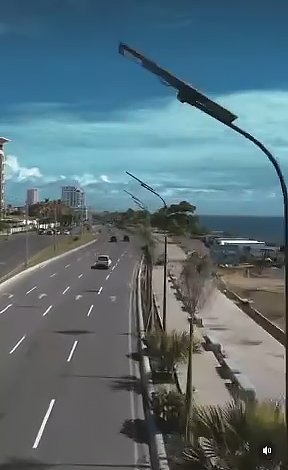
We delivered the 130W Sunplus system required to power CCTV cameras 24/7. Even under continuous high-load operation, the authentic battery capacity has proven completely reliable, earning endorsements from local municipal leaders.
View Project Details →3. High Salt Spray Verification — Reunion Island (2020)
Location: Reunion Island (Indian Ocean) | Product: Sunpro Series
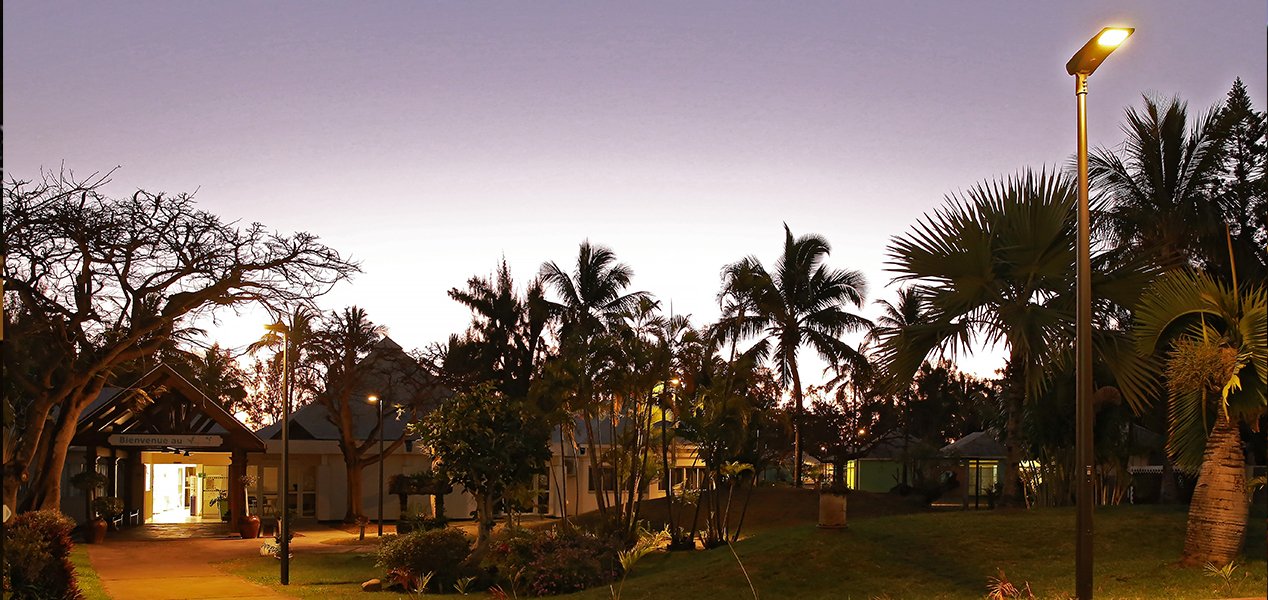
Deployed on this volcanic island in 2020, the systems have operated for 6 years with no visible signs of corrosion, enduring constant salt spray and cyclonic conditions.
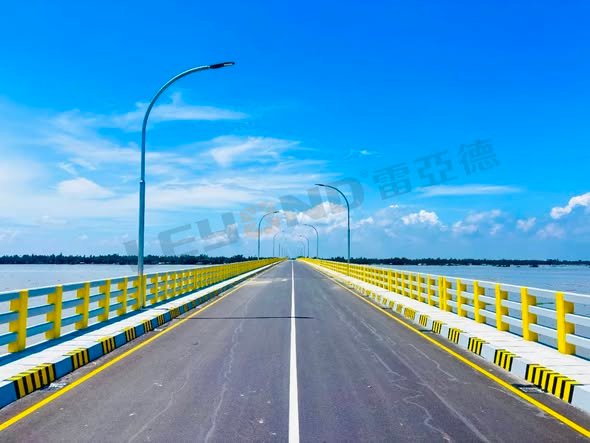
View Project Details →4. National Infrastructure Projects — Bangladesh
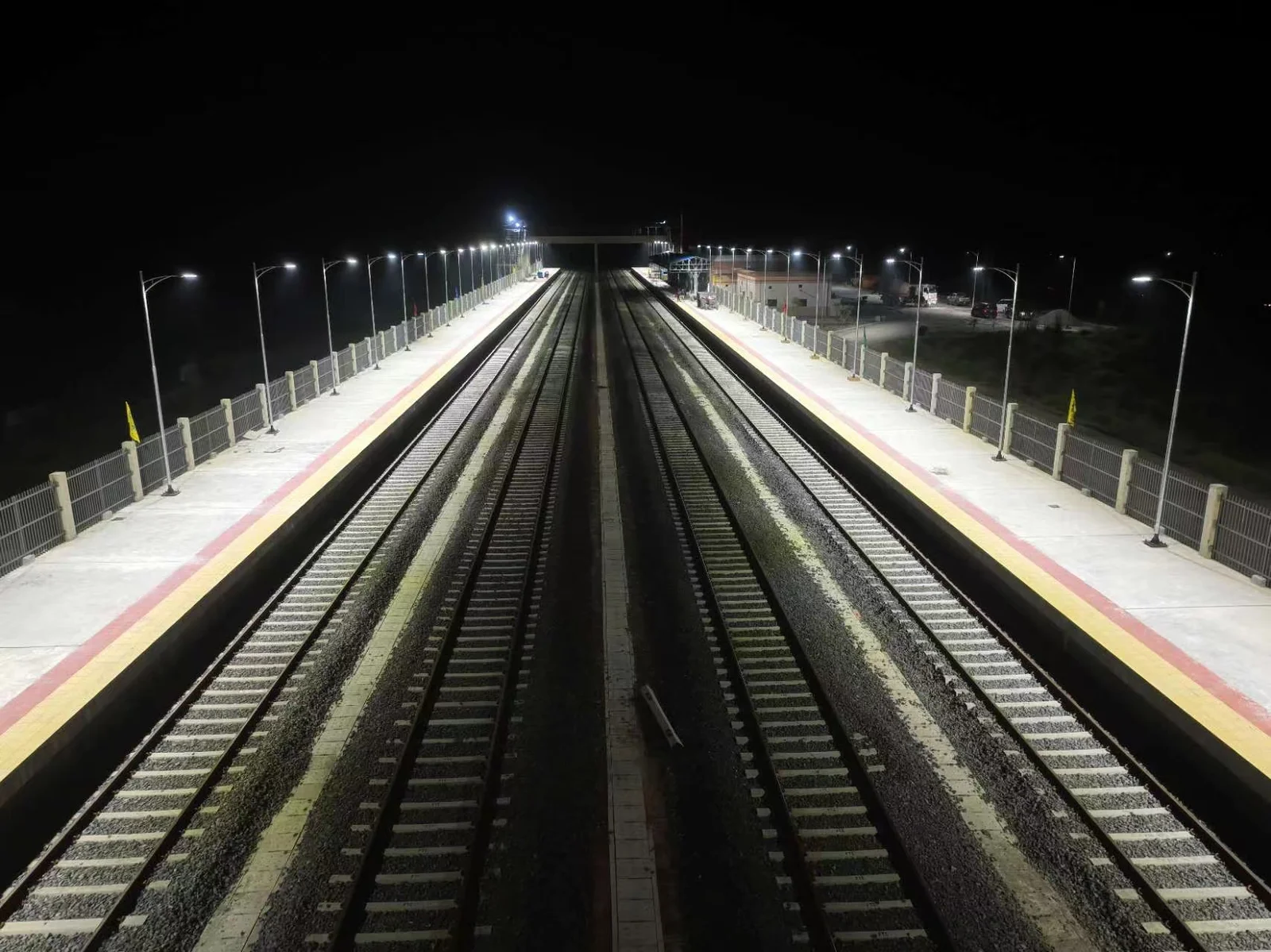
Projects: Padma Bridge & Teesta Bridge
Our participation as a lighting supplier for national-level infrastructure projects reflects our industrial-grade quality control and immense delivery capabilities. We are proud to partner with top-tier state-owned enterprises:
VI. How to Smoothly Pass the DPWH Technical Audit?
Before bidding, we highly recommend preparing: IES Optical Files, Dialux Simulation Reports, Wind Load Calculations, Salt Spray Test Reports, and Battery Cycle Certifications.
Our high-efficacy 180–200 lm/W systems allow contractors to reduce wattage configurations while maintaining the same pole spacing.
Example: Traditional 120W System → High-Efficacy 80W System → Achieves Same Illuminance → Saves ~30% Budget Per Pole
VII. Prepare for Your Next Barangay or Municipality Project
Are you preparing bidding documents for a new solar street light project? Don't lose the bid due to incomplete optical files, falsified battery capacities, or inaccurate illuminance simulations.
Secure your competitive advantage by accessing our complete engineering tech pack:
- ✔ DPWH Standard Solar Street Light Project Proposal PDF Template
- ✔ Comprehensive Technical Datasheets
- ✔ IES Files and Dialux Simulation Samples
Frequently Asked Questions (FAQ)
Q1: Does DPWH have a specific technical standard exclusively for solar street lights?
Currently, the DPWH has not issued an independent technical specification exclusively for solar street lights. However, all projects must comply with general road lighting performance requirements including illuminance, wind load safety, and weather resistance. Solar systems must achieve these exact metrics under off-grid conditions. The true challenge is sustaining these metrics reliably over the long term amidst high temperatures and typhoons.
Q2: How do you determine if a solar street light is truly suitable for a Barangay or Municipality project?
Evaluate across four dimensions: 1. Use of unibody die-cast aluminum or high-standard extrusion. 2. Authentic capacity LiFePO4 batteries. 3. Genuine off-grid MPPT controllers. 4. Availability of IES files and Dialux simulations. Most importantly, verify stable operational records of 5-7+ years in extreme environments.
Need Professional Advice for Your Selection?
Contact our engineering team for free technical selection advice based on 18 years of expertise.
Get My Free Quote
Skay Xia - International Sales Manager
Hello Customers, I have been deeply involved in the LED lighting industry for over 18 years. I excel at providing customized lighting solutions and professional technical support. Feel free to contact me for your project needs.
Email: sales05@leyond.com.cn